Research Projects
My research has developed along two trajectories. My earlier work examined the intersections of ageing and transnational migration, i.e. transnational eldercare, later-life mobilities, politics of belonging and citizenship. As a faculty member on Educator track (2020-2025), I focused on geographical pedagogy with an emphasis on feminist approaches, and blended and digitally mediated forms of teaching and learning.
Pedagogy

Teaching Pre-University Geography through Role-play and Deep Listening: Enhancing Geographical Inquiry using Interdisciplinary Strategies for Managing Classroom Dynamics
2023-2025
Collaborator
Principal Investigator: Kamalini Ramdas, Department of Geography, National University of Singapore
Other collaborators: Robin Loon, Department of Theatre Studies, National University of Singapore, Shobha Avadhani, Department of Communications and New Media, National University of Singapore & Josef Tan, Ministry of Education
Funding: National Institute of Education, Singapore
The study explores the potential for embodied forms of role-play and deep listening to create a safer classroom space for students to discuss potentially contentious topics related to identity politics and issues of social justice, i.e. urban liveability and environmental injustice. The project produced a teaching resource for pre-university geography teachers which included role-play scripts, teaching notes and a video
Blended Learning and Interactive Fieldtrip Worksheets
2022-2023
Principal Investigator
Funding: Blended Learning 2.0, NUS Provost’s Office, National University of Singapore.
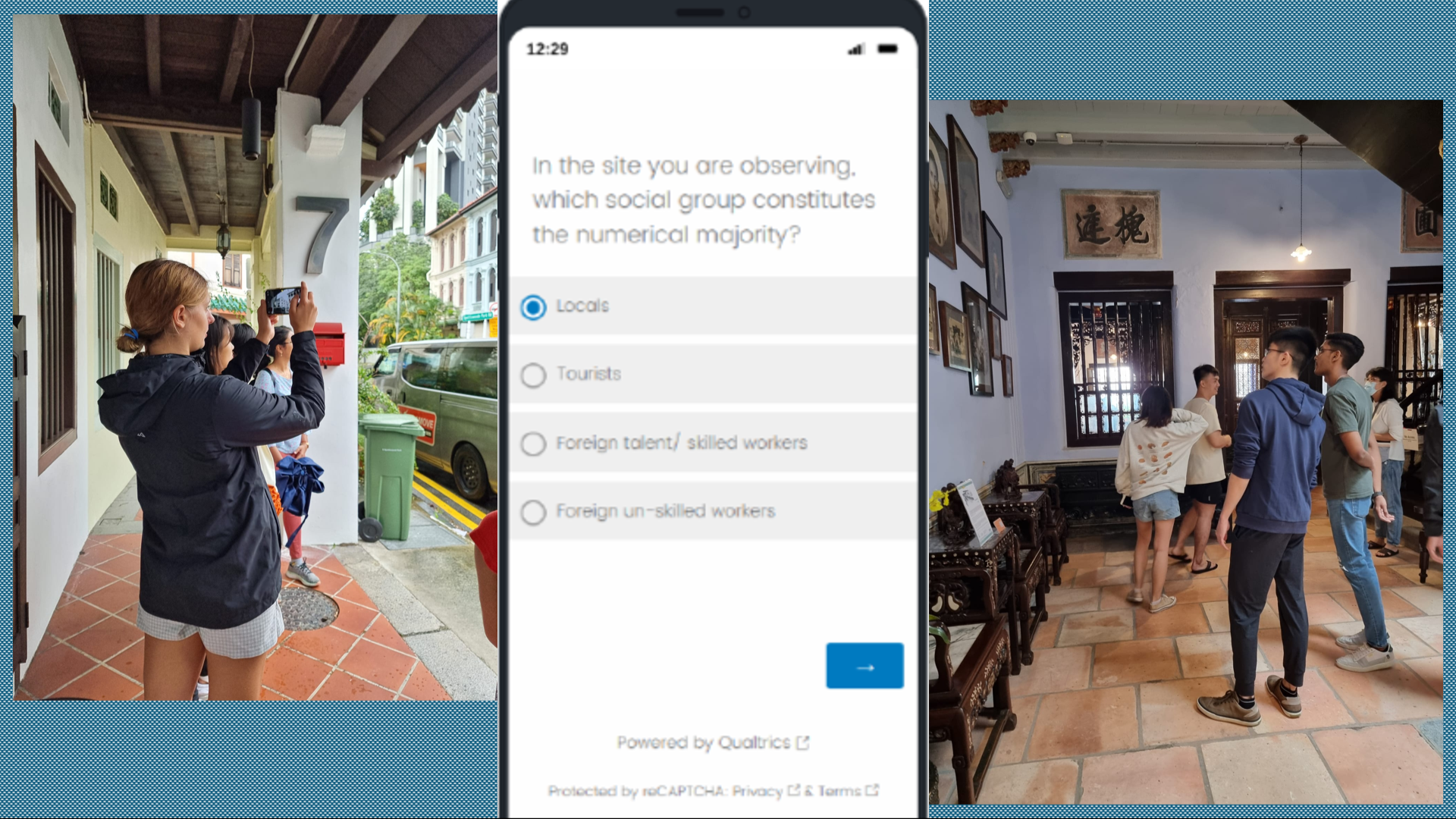
This project focused on revamping the course ‘Changing Landscapes of Singapore’ for blended learning, which included the creation of pre-recorded bite-sized lecture segments, self-assessment quizzes, integration of Padlet for collaborative learning. In addition, interactive fieldtrip worksheets were developed to help student connect concepts taught in class with what they observe in the field as they conducted their self-guided fieldtrips.
Virtual Fieldtrips and Collaborative Pedagogy
Ageing and Migration
2020-2021
Co-Principal Investigator
Co-Principal Investigator: Kamalini Ramdas, Department of Geography, National University of Singapore
Collaborators: Shirlena Huang, Department of Geography, National University of Singapore & Sarabjeet Singh, Young Sikh Association (YSA), Singapore
Funding: Staff Research Support Scheme (SRSS), Faculty of Arts and Social Sciences, National University of Singapore
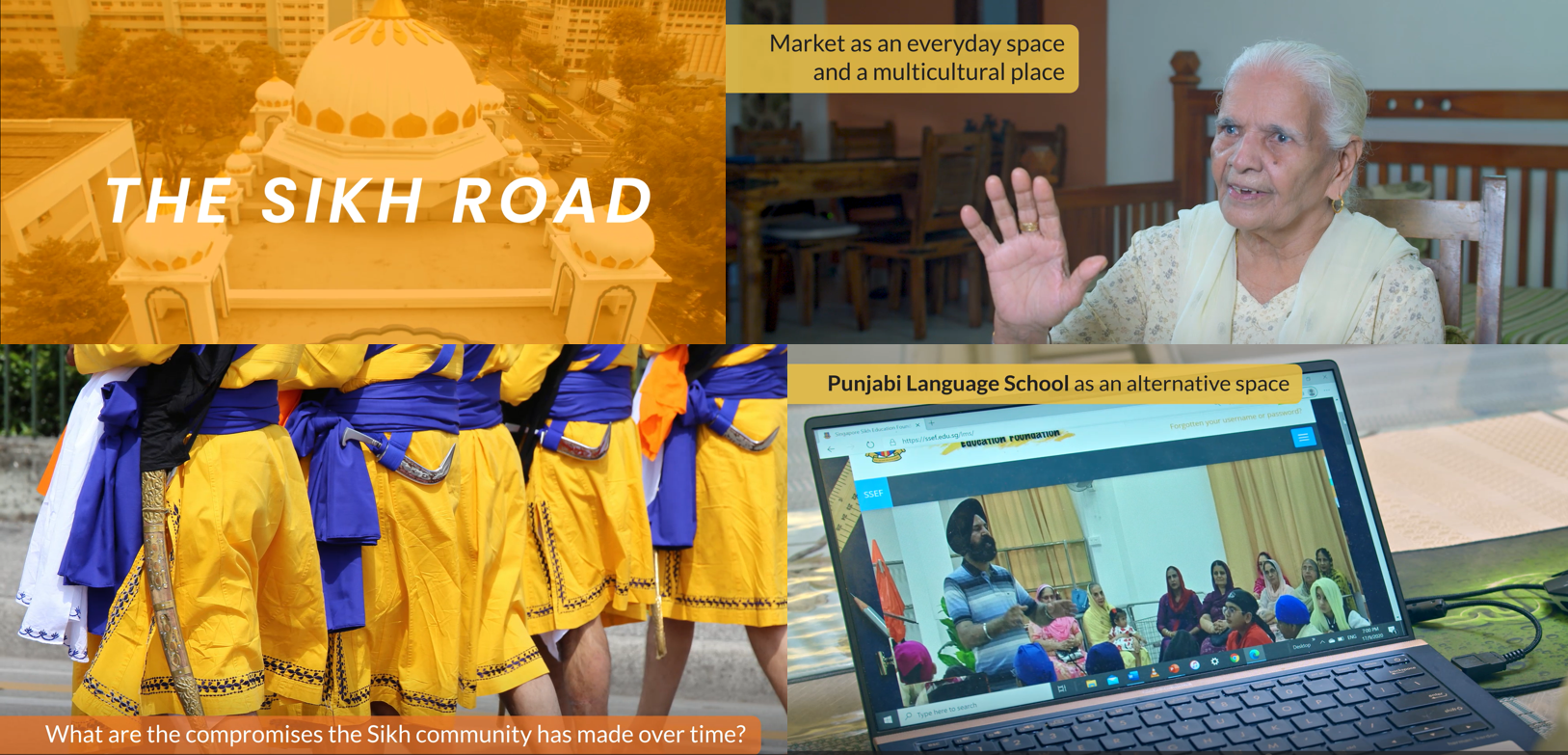
Developed as a response to the Covid-19 pandemic, a virtual field trip video titled ’The Sikh Road’ was produced as a shared resource for the teaching of the university course ‘Changing Landscapes of Singapore’ and community awareness. The co-lecturers of the module created the framework for the video narrative, while YSA produced the video content. The video featured the Sikh community (a minority community in Singapore) and local landscapes of significance to them, including a major Sikh gurdwara (temple) and interviews with various members of the Sikh community in Singapore speaking on its history, culture, everyday life and experiences.
Relevant Publications/Outputs
Ramdas, K. and De Silva, M. (2025) Commentary – Community Engagement Courses and Feminist Participatory Action Research: Pedagogies of Sacrifice and Refusal. The Geographical Journal, 191(4), e70035. DOI: 10.1111/geoj.70035
Department of Geography, National University of Singapore & Young Sikh Association – Singapore. (8 April 2021). The Sikh Road [26 minutes]
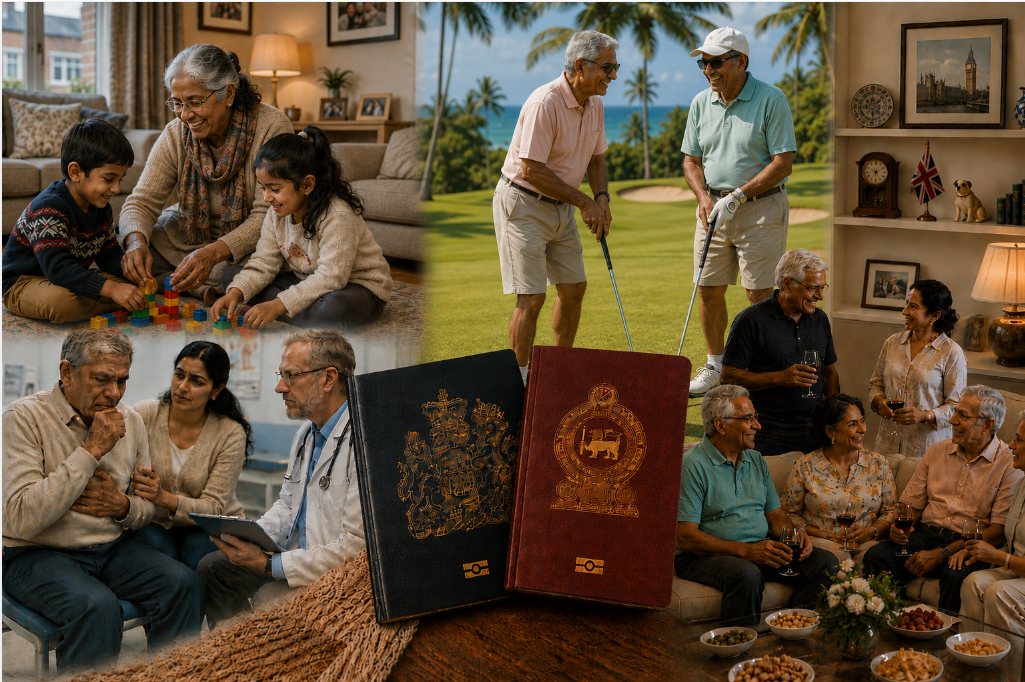
Ai-generated images are used to avoid possible disclosure of participant identifiers
Return, Reflection and Rationalisations: Geographies of Cumulative Inequality among Returning Retirement Migrants from the United Kingdom to Sri Lanka
2012-2017
Principal Investigator
Academic Advisors: Shirlena Huang (main), Elaine Ho, Leng Leng Thang
Funding: Graduate Research Support Scheme Grant, Faculty of Arts and Social Sciences, National University of Singapore.
This doctoral research forwards the concept of ‘retirement migration as return’ by examining the return experiences of sixty retired, skilled Sri Lankan immigrants in the United Kingdom. The study interrogates how the negotiation of transnational citizenship entitlements by the retired migrants impact upon their decisions to either return to Sri Lanka upon retirement, retire in the United Kingdom or alternate between the two countries. The findings demonstrate how individuals continuously assess the cumulative effect of the benefits and risks attached to their transnational citizenship statuses, which accumulate at multiple levels, and that they rationalise their past migration and citizenship manipulations to co-exist with the complications of maintaining dual affiliations and their transnational retirement lifestyles.
Relevant Publications
De Silva, M. (2023) Pragmatic transnationalism: Sri Lankan-British retired migrants’ negotiations of transnational citizenship and (un)belonging. Professional Geographer, 75(1), 155-163. DOI: 10.1080/00330124.2022.2087693
De Silva, M. (2020) Beyond the ‘age’ lens: Older migrants’ negotiation of intersectional identities over the lifecourse. In Shirlena Huang and Kanchana Ruwanpura (eds) Handbook on Gender in Asia, Edward Elgar, pp. 275–291.
Ai-generated images are used to avoid possible disclosure of participant identifiers
Migration, the Elderly and Care Networks: A Study of Eldercare among Sri Lankan-Australian Transnational Families
2009-2011
Principal Investigator
Academic Advisor: Shirlena Huang
Funding: Graduate Research Support Scheme Grant, Faculty of Arts and Social Sciences, National University of Singapore.
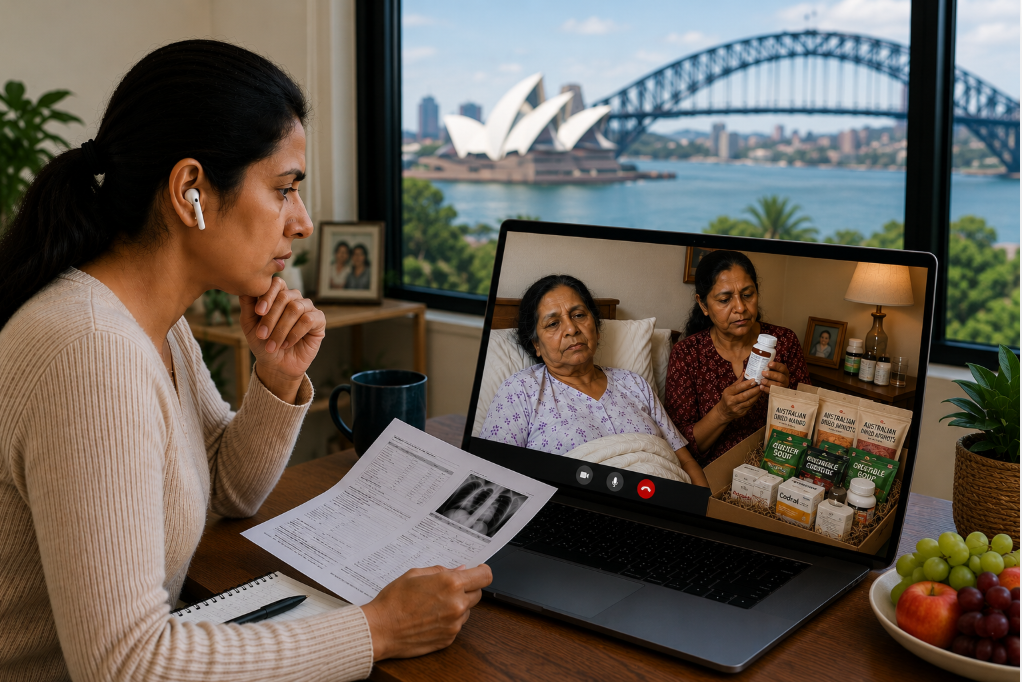
This Masters project examines the transfer of eldercare across international borders, and how care gaps are addressed to varying degrees by multiple actors of care, namely the family, community, market and state. Through dual-sited qualitative interviews in Australia and Sri Lanka, the research draws on thirty transnational family case studies which incorporate the care experiences of the elderly parents, their migrant children and their locally-based adult children.
Relevant Publications
De Silva, M. (2018). Making the emotional connection: Transnational eldercare circulation within Sri Lankan-Australian transnational families. Gender, Place and Culture, 25(1), 88-103. DOI: 10.1080/0966369X.2017.1339018 [ResearchGate]
De Silva, M. (2017). The care pentagon: Older adults within Sri Lankan-Australian transnational families and their landscapes of care. Population, Space and Place, 23(8), e2061. DOI: 10.1002/psp.2061.
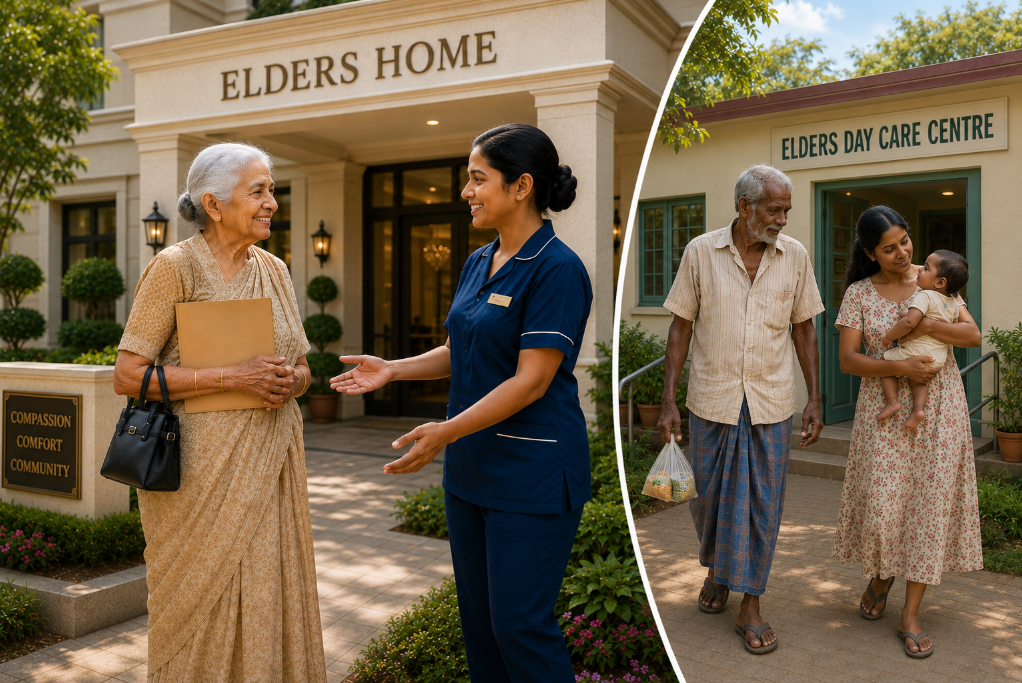
Ai-generated images are used to avoid possible disclosure of participant identifiers
Social-cultural Issues within Elderly Institutional Care Services in the Colombo district: An Urban-Rural Comparison
2006-2007
Academic Advisor: Omala Perera
Drawing on interviews with service recipients and service providers from eight elders’ homes and eight daycare centres, the project identified the main reasons for older persons to use these institutional care services and the challenges they face. The study problematises a common assumption that elderly who rely on institutional care are destitute and lack support from their adult-children.
Reach out
Are you interested in collaborating or learning more about my work? Do reach out to have a conversation